 Choose delivery from 4-8 weeks onwards

Your Ultimate Guide to Setting Up a Garden Room Gym for Year-Round Fitness
|
Worth Reading
Can you actually use a garden gym all year round, or is it just a nice space for a few months of summer?
It’s the question most people ask before committing to a home gym garden room, and it’s a fair one. Plenty of garden buildings look great in July and feel unusable by November.
It depends entirely on the build. A poorly insulated structure with single glazing will feel exactly like exercising in a shed in January. A properly insulated, ventilated pod won’t. Below, we’ll go through what actually makes the difference.
- A home gym garden room only works year-round if it’s properly insulated and ventilated, not just weatherproof on the outside.
- The NHS recommends 150 minutes of moderate activity a week. A space a few steps from your back door removes most of the friction that stops people hitting that target.
- Insulation and double glazing are what stop a garden gym from being a summer-only space.
- Flooring and airflow matter more in a gym pod than almost any other garden room, since workouts generate real humidity.
- Sizing depends on your equipment: a compact setup needs far less room than a full multi-station gym.
- Electrics need to be planned properly if you’re running a treadmill, spin bike or rack.
- Ready to see it in person? Take a look at our garden gym Pods.
Can you really use a garden gym all year round?
You can use a garden gym all year round, but only if it’s insulated, ventilated and properly sealed. A garden gym built the same way as a typical shed or summer house will struggle in winter, getting cold, damp, and uncomfortable to train in. A pod built with proper insulation and double glazing keeps a stable, comfortable temperature regardless of the season.
This is really the difference between a garden building that happens to have a yoga mat in it, and one that’s actually designed to be trained in every week of the year.
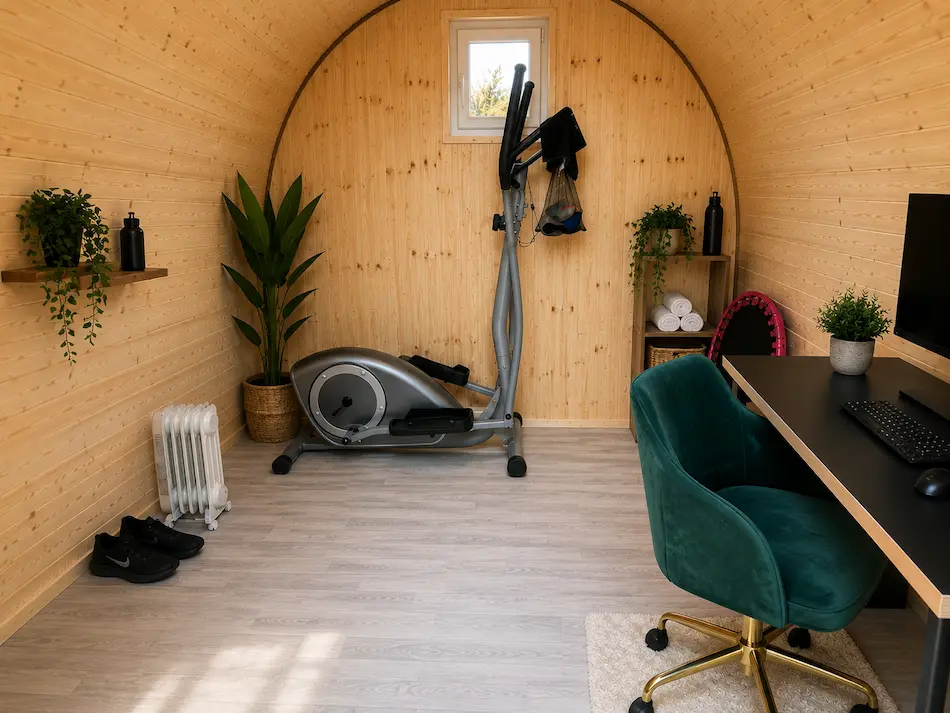
Why a home gym garden room beats a corner of the house
Adults in the UK are advised to do at least 150 minutes of moderate intensity activity a week, spread over four to five days, or 75 minutes of vigorous activity, according to NHS guidance on physical activity for adults. That’s not a huge amount of time. The real barrier for most people isn’t motivation, it’s friction: getting changed, travelling, waiting for equipment.
A garden gym removes almost all of that. There’s no commute, no queue for the squat rack, and no one watching while you figure out a new machine. It’s also fully separate from your living space, so it stays dedicated to training rather than competing with the sofa for your attention.
What makes a garden gym work in winter and summer alike?
The two things that matter most are insulation and ventilation. Insulation keeps heat in during winter and out during summer, while ventilation stops the space feeling stuffy or humid once you start working up a sweat.
Every Hully Pod is built with a fully insulated fibreglass shell, along with double-glazed windows that open and lock. That combination is what keeps the temperature usable whether it’s a heatwave or a frosty morning. If you want a deeper look at how that holds up in the coldest months, our guide on keeping a garden room warm through winter covers it in more detail.
Flooring and ventilation: the two details people get wrong
A home office pod and a home gym pod have different needs, even though they look similar from the outside. Exercise generates heat, sweat and moisture in a way that working at a desk doesn’t, so airflow and flooring both need to work harder.
Good ventilation isn’t just about comfort. Without it, the condensation from a sweaty workout can build up on cold surfaces and lead to the same damp issues you’d see in any poorly ventilated structure. We’ve covered the mechanics of this in our guide on how to stop a garden room getting damp, and the same principles apply directly to a gym space, only more so.
Flooring matters too. It needs to handle dropped weights, sweat, and repeated use without warping or staining, which is why our floor options are built to be both durable and easy to keep clean.
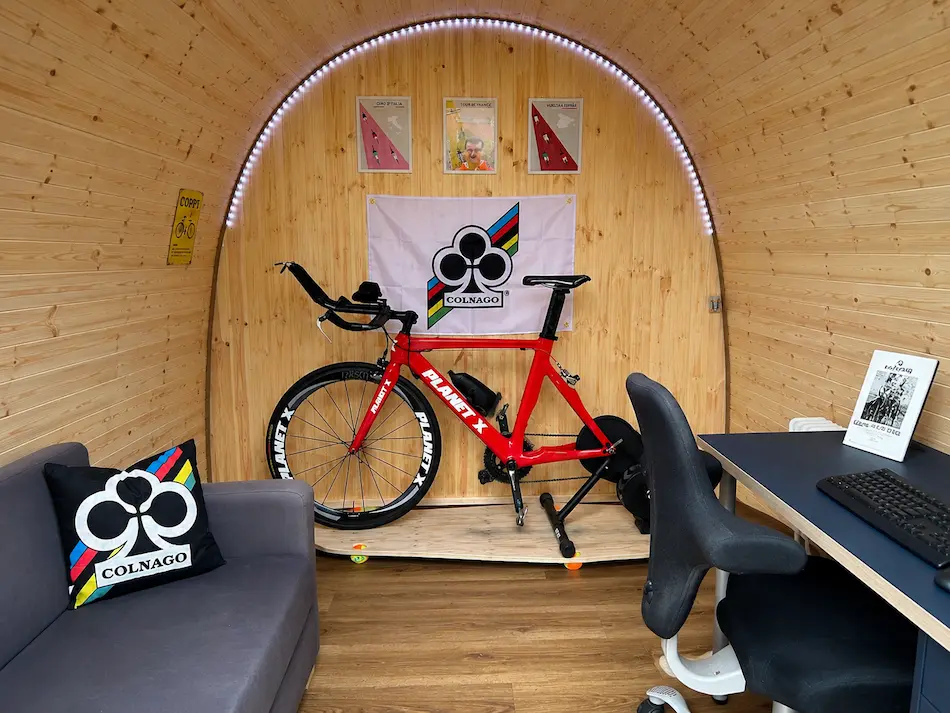
How much space do you need for a home gym pod?
It depends on what you’re training with. A compact setup with a yoga mat, resistance bands and a few free weights needs very little space. A fuller gym with a treadmill, a spin bike and room to stretch out needs considerably more.
It’s also worth thinking about the base it’ll sit on before you order. A solid, level base is essential for any garden pod, but it matters even more for a gym, where equipment is heavier and more frequently moved. Our guidance on foundations is worth reading before you finalise your layout.
Powering your equipment safely
A treadmill, spin bike or any electrical fitness equipment needs a safe, properly installed power supply, not an extension lead trailing across the garden. This is one of the most overlooked parts of planning a garden gym, and it’s worth getting right from the start.
Every Hully Pod comes with an electrical hookup, so you can run equipment, lighting or a fan without worrying about overloading anything. If you want to understand how that wiring works in practice, our breakdown of how we wire a pod safely explains the basics.
Where to go from here
If a home gym garden room sounds like the upgrade your routine’s been missing, the next step is seeing what’s actually available. Ready to get active in your own garden gym room?
Our garden gym Pods are built specifically for this, with insulation, ventilation and electrics designed for year-round training, not just a few warm months.
Conclusion
A garden gym only works as a year-round space when the fundamentals are right: proper insulation, real ventilation, flooring that can take a beating, and electrics that are planned rather than improvised. Get those right, and the only thing standing between you and a workout is walking out your back door.
If you’re ready to explore your options, take a look at our garden gym pods range, or get in touch to talk through what would suit your space and your training.
Frequently Asked Questions
Do I need planning permission for a garden gym?
In most cases, no. A garden gym pod typically falls under permitted development rights, since it’s considered incidental to the main house. It’s still worth checking with your local council if you have any doubts about your specific property.
Can I fit gym equipment like a treadmill or rack in a garden pod?
Yes, as long as the pod is sized appropriately and the electrics are set up to handle it. Larger equipment like a treadmill or multi-station rack needs more depth, so it’s worth measuring your equipment before choosing a size.
Will a garden gym get too cold in winter?
Not if it’s properly insulated and double glazed. A poorly built garden building will feel the cold quickly, but a fully insulated pod stays comfortable to train in throughout the year.
How do I stop my garden gym getting damp from sweat and humidity?
Good ventilation is the key. Opening windows after a workout, along with a pod that’s designed with proper airflow, stops moisture building up on walls and surfaces over time.
How long does it take to install a garden gym pod?
Most pods arrive fully assembled and ready to use, so there’s no lengthy construction process. Exact delivery timelines vary depending on demand, so it’s worth checking current lead times when you order.
Learn about our Access Requirements.
Get Your Perfect Garden Room Gym With Hully
Take the first step towards creating your own garden room gym with Hully Pods. Our range of Pods offers the perfect blend of functionality, style, and ease of installation, making them an ideal choice for your home fitness journey. Year-round wellness is just a Pod away—embrace it with Hully Pods and elevate your fitness journey today.