 Choose delivery from 4-8 weeks onwards

What Are Prefab Garden Rooms?
|
Worth Reading
The UK garden room market was worth £266 million in 2024 and is forecast to keep growing at 5.8% a year through 2030. That growth isn’t a coincidence. More people than ever need extra space at home, but buying a larger property isn’t realistic for most families. A traditional extension takes months, costs a fortune, and turns your home into a building site.
Prefab garden rooms solve all three problems at once. They give you a brand new, fully usable room without the chaos.
In this guide, you’ll learn exactly what a prefabricated garden room is, how it compares to a traditional extension, what it costs, whether you need planning permission, and what you can use it for. By the end, you’ll have everything you need to decide if one is right for your home
- A prefab garden room is a factory-built structure delivered and installed in your garden, usually in a single day
- No on-site building work, and no planning permission needed in most cases
- Prices start from £2,995, far cheaper than a traditional extension
- Use them as a home office, gym, salon, guest room, gaming room, and more
- Hully Pods are installed in less than a day, starting from £2,995 including VAT and delivery
What exactly is a prefab garden room?
A prefab garden room is a fully finished structure manufactured in a factory and then transported to your property for installation. The building arrives in sections or as a complete unit, ready to be placed in your garden on a prepared base, with no traditional on-site construction required.
That single distinction matters more than it might seem.
Traditional buildings are constructed piece by piece in your garden, exposed to weather delays, labour shortages, and the unpredictability of any outdoor build. A prefab garden room is built in controlled conditions, quality-checked before it leaves the factory, and installed in a matter of hours. Hully Pods, for example, are placed in less than a day.
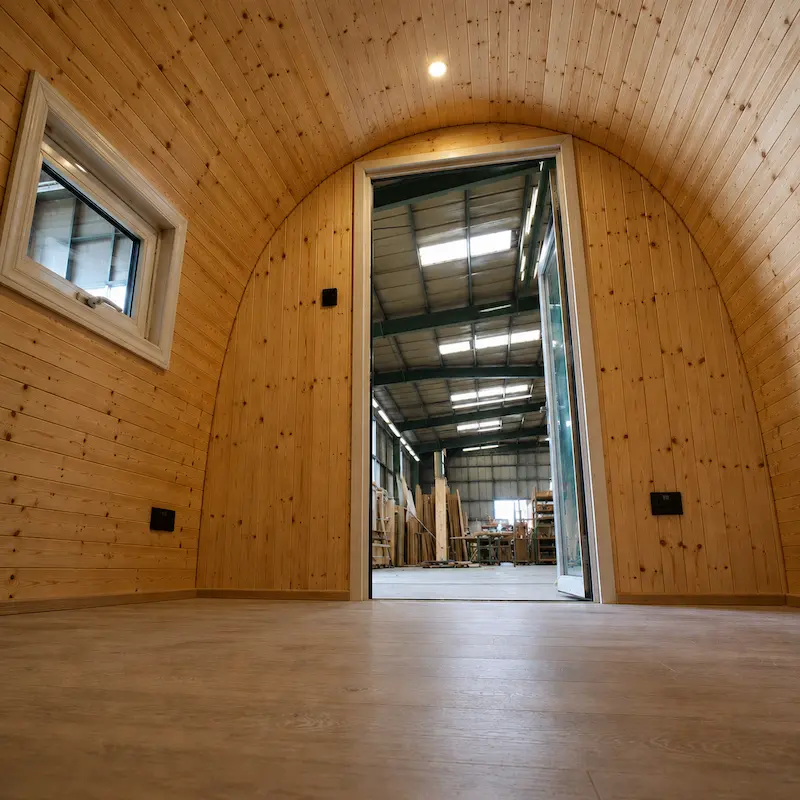
The term “prefab” covers a range of build types. Some arrive as flat-pack kits you assemble yourself. Others, like Hully Pods, come fully built and are craned into position. The key features they all share: off-site manufacture, fast installation, and a ready-to-use finished space.
Materials vary by manufacturer. Common choices include timber frames, SIP panels (Structural Insulated Panels), and composite cladding. Hully Pods use a design inspired by boat hull construction and have a fibreglass outer shell, which gives them an unusually strong and weather-tight structure for their price point.
Prefab garden room vs. traditional extension: what’s the difference?
A prefab garden room is faster, cheaper, and far less disruptive than a traditional home extension, while still giving you a permanent, functional extra room. The two main trade-offs are that a garden room is detached from the house and sits in your garden rather than extending the existing floor plan.
Here’s how the two options compare directly:
Prefab garden room | Traditional extension | |
Typical cost | £3,000-£30,000 | |
Build time | Hours to a few days | 3–6 months |
Planning permission | Usually not required | Almost always required |
Disruption | Minimal, no knock-throughs | Significant |
Reversible | Yes, can be removed | No |
The cost difference is partly about materials, but also about labour. As this breakdown of prefab vs. traditional builds explains, traditional extensions spend most of the budget on on-site labour. With a prefab, most work happens in the factory, which dramatically reduces what you pay per square metre.
A prefab garden room also doesn’t require you to knock through walls, redirect plumbing, or rewire your home. Those “hidden” costs are exactly what pushes traditional extension budgets so far over the original quote.
Do prefab garden rooms need planning permission?
In most cases, no. Prefab garden rooms in the UK fall under Permitted Development rights (Class E), which means you can build without a formal planning application, provided your structure meets a few straightforward conditions.
The main rules to know:
- The garden room must not cover more than 50% of the total garden area (including any existing outbuildings)
- It must not be positioned in front of the main wall of your house
- If it’s within 2 metres of a boundary, it cannot exceed 2.5 metres in height
- It cannot be used as a separate self-contained living space or sleeping accommodation
For a full breakdown of the rules and any local exceptions, read our garden room planning permission guide.
There are a few situations where you will need planning permission regardless. These include listed buildings, conservation areas, National Parks, and properties that are flats or maisonettes, which don’t have Permitted Development rights. If you’re in any doubt, check with your local planning authority before you order.
One useful step even when planning permission isn’t required: apply for a Lawful Development Certificate. It costs around £206 in application fees (2025) and gives you formal proof of compliance, which solicitors may ask for when you sell your home.
What can you use a prefab garden room for?
This is where prefab garden rooms really stand out. Because they’re fully insulated, weatherproof, and can be wired for electricity, they function as proper rooms rather than glorified sheds.
The most popular uses:
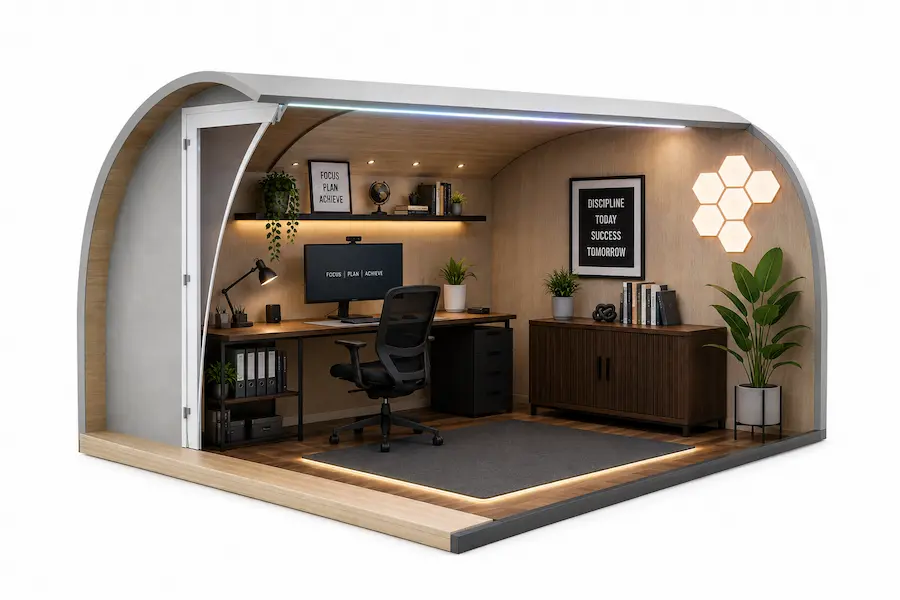
Home office. The most common reason people buy a garden room. A dedicated workspace just steps from your back door removes the distractions of working from home without a commute. For practical setup tips, see our guide on how to extend WiFi to your garden office.
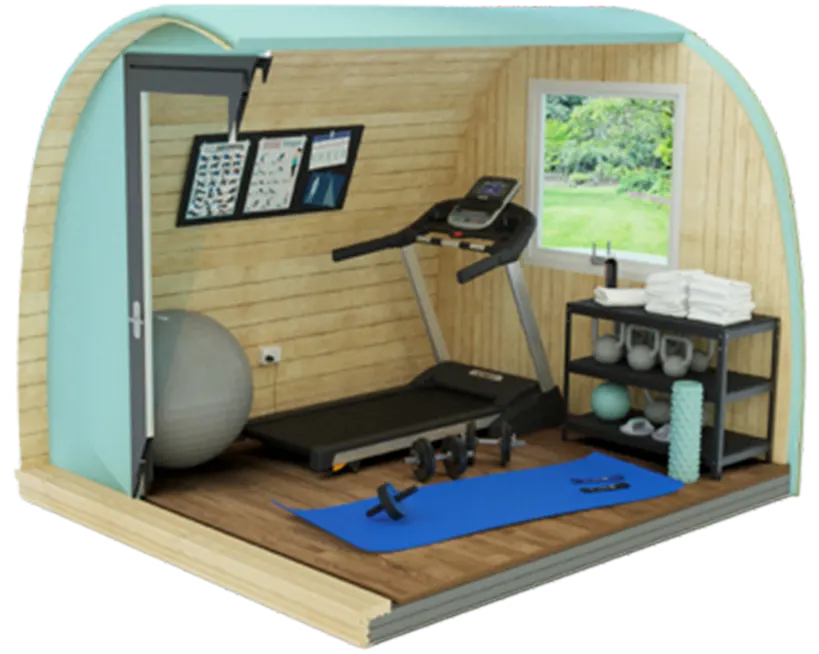
Garden gym. A private gym you can use at any time, with no membership fees. Our garden gym pods are built to handle the weight and use of regular training sessions.
Beauty salon or dog grooming. A fully separate space to run a small business from home, with its own entrance and a professional feel.

Gaming or entertainment room. A dedicated space for screens, consoles, and speakers without taking over a room in the house.

Guest room. With the right insulation and heating, a garden room makes a comfortable place for guests to stay. Note that using it as permanent sleeping accommodation may affect your planning permission status, so check first.
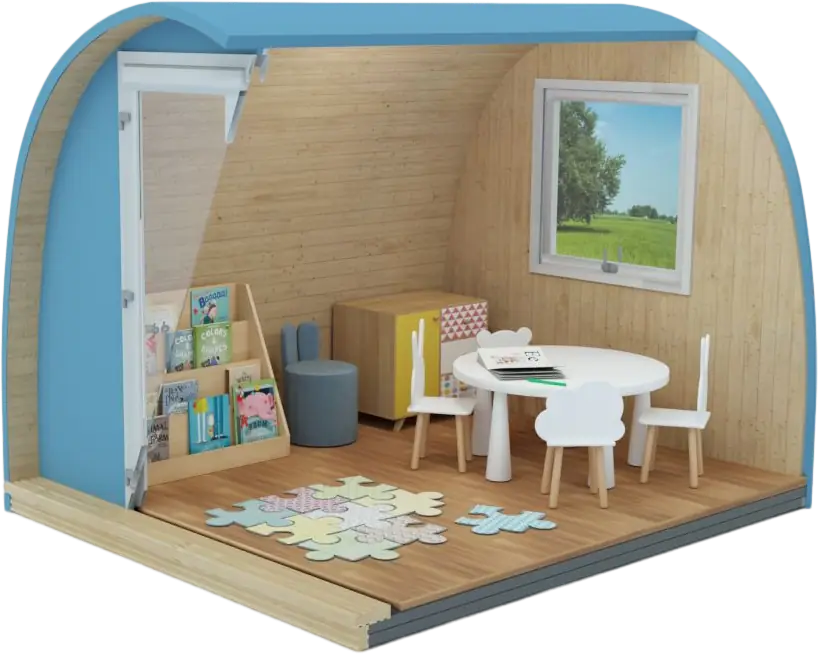
Classroom or tutoring space. Schools, nurseries, and private tutors have all used garden rooms to create extra learning environments.
How much do prefab garden rooms cost in the UK?
Prefab garden rooms in the UK range from around £3000 for a compact, fully delivered option like a Hully Pod, up to £30,000 or more for a large, bespoke modular build with premium finishes.
The current average costs per square metre break down roughly like this:
- Prefabricated kit: £800–£1,400/m²
- Professional build: £1,800–£2,800/m²
What drives the price up: size, wall thickness and insulation level, glazing choices (bifold doors, skylights), electrical installation, and cladding materials. What keeps it down: standardised designs, off-site manufacture, and minimal on-site labour.
Don’t forget to factor in what base your pod will need. A concrete base typically runs around £190 per cubic metre, and this cost is separate from the pod itself in most cases.
One thing worth noting: a well-insulated room costs more upfront but saves money long term. A poorly insulated structure will be expensive to heat in winter and unusable in summer. For guidance, see our tips on how to keep your garden room warm in winter.
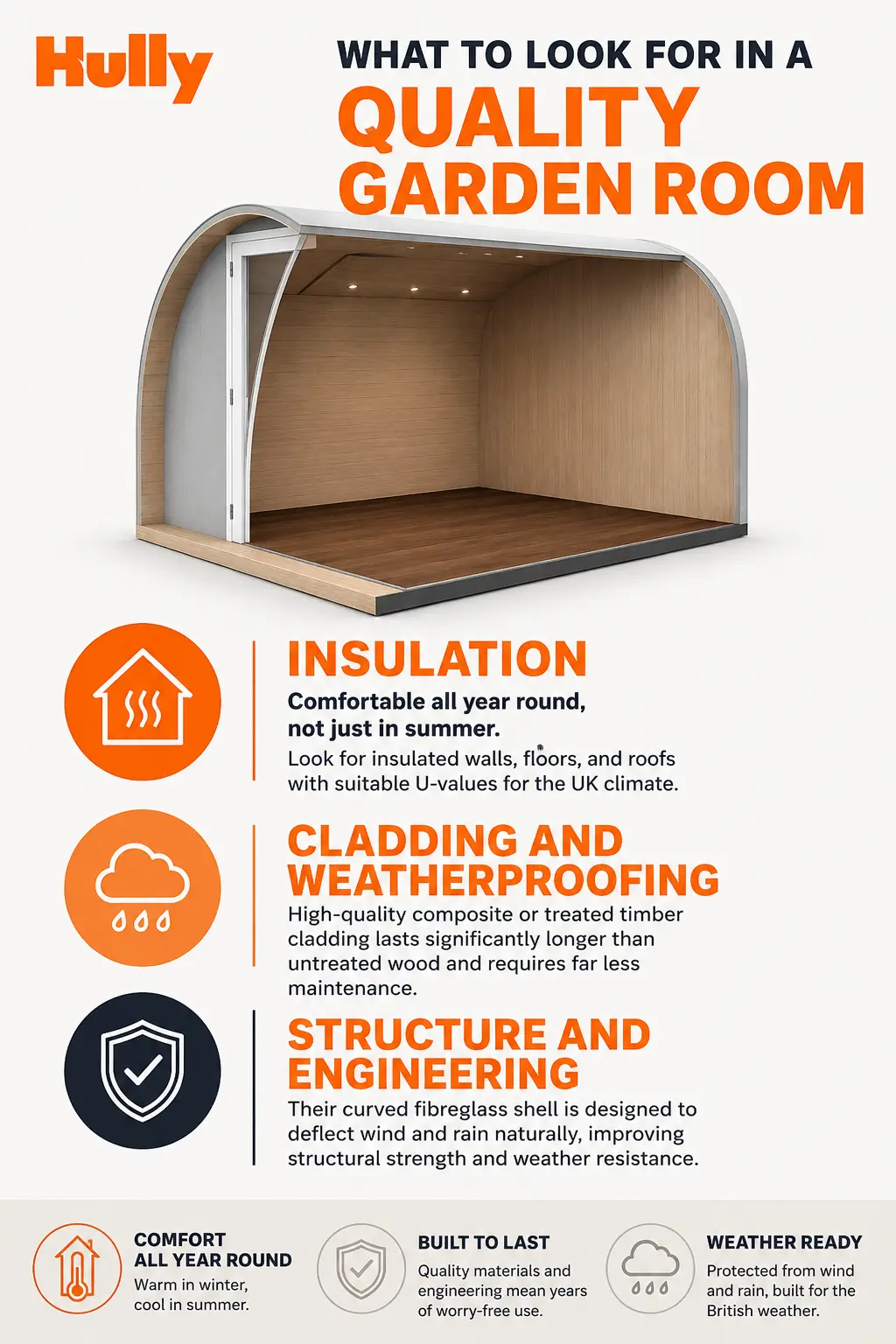
Insulation
A proper garden room should be comfortable all year round, not just in summer. Look for insulated walls, floors, and roofs with suitable U-values for the UK climate. Thin, uninsulated panels are usually a sign of a seasonal product rather than a true garden room.
Cladding and weatherproofing
High-quality composite or treated timber cladding lasts significantly longer than untreated wood and requires far less maintenance. EPDM rubber roofing has become the modern standard for flat-roof garden rooms because of its durability and watertight performance.
Structure and engineering
This is where Hully Pods stand apart from much of the market. Rather than relying on a conventional timber-box design, the Pods take inspiration from marine engineering. Their curved fibreglass shell is designed to deflect wind and rain naturally, improving structural strength and weather resistance.
The outer shell is built from robust, durable fibreglass, the same material trusted in boats built to withstand harsh British coastal conditions. If it is strong enough for the sea, it is more than capable of handling year-round British weather in gardens across the UK. The shell is engineered for longevity and is designed to last for decades, with a projected lifespan of 20 years or more.
Estate agents increasingly view well-built garden rooms as genuine value-adding features, particularly when they are fully insulated and finished to a high standard. A quality garden room is not just useful today, it is an investment in your property for the future.
Conclusion
Prefab garden rooms are one of the most practical ways to add space to your home in the UK right now. They’re fast to install, far cheaper than a traditional extension, and don’t require planning permission in most cases. Whether you need a home office, a gym, a guest room, or a professional workspace, a good prefab garden room will serve you for years.
Hully Pods are designed to make this as straightforward as possible. Prices start from £2,995 including VAT and delivery, and installation takes a few hours.
Ready to find the right size for your garden? Compare all Hully Pod sizes and configurations and find the one that fits your space and budget.
Frequently Asked Questions
What is the difference between a prefab garden room and a garden shed?
A garden shed is typically an uninsulated storage structure not designed for regular occupation. A prefab garden room is a fully insulated, weatherproof building intended for use as a living or working space. Garden rooms can be wired for electricity and used year-round, while most sheds cannot.
Can I insulate a prefab garden room for year-round use?
Yes. Most modern prefab garden rooms, including all Hully Pods, come with insulation included. For year-round comfort in the UK climate, look for wall insulation with a U-value of 0.28 W/m²K or better, combined with double glazing and an efficient heating source such as an infrared panel or electric radiator.
How long does it take to install a prefab garden room?
Installation time depends on the type and size of the garden room. Fully manufactured pods like Hully Pods can be installed in less than a day once the base is prepared. Flat-pack kits that you assemble yourself typically take one to two weeks. The preparation of the base, whether timber, concrete, or paving slabs, should be completed before delivery day.
Do prefab garden rooms add value to your home?
Generally, yes. A well-insulated, high-quality garden room is increasingly treated as a genuine selling point by UK estate agents, particularly since remote working became mainstream. The added value depends on the quality of the build, the finish, and how well it suits the property. A poorly built or uninsulated structure is less likely to add meaningful value.
Can I get a prefab garden room on finance?
Yes. Hully Pods offer finance options subject to deposit and status. Spreading the cost makes it possible to get a quality garden room without paying the full amount upfront. Check the finance page for current terms and eligibility.